
Strip Piecing Is a Game-Changer… Trust me on this one.
Ever stared at a quilt pattern with a million tiny squares and thought, ‘There’s got to be a faster way to do this?’ First, the “Oh my gosh, what have I gotten myself into takes over, and then the overwhelm becomes real. Well, there is a better way (no overwhelm necessary)... Introducing strip piecing.
Seriously, strip piecing is your saving grace. It saves you time (because heaven only knows quilting is not an instant gratification hobby), and it helps you maintain consistency across your quilt blocks. Say goodbye to those wonky lines.
Strip piecing is a simple yet satisfying technique that works for both classic and modern quilt styles. It speeds up your quilting without you having to sacrifice your precision. No more one or the other choices. Imagine… quicker (because quilting will never be totally quick) and precise. It’s a best of both worlds technique.
What Is Strip Piecing (and How Does It Work)?
Strip piecing is a technique where you sew long fabric strips together first, then cut them into smaller units to create blocks that are already pieced. By sewing the strips into strip sets, you reduce the time and need to cut and sew a tedious number of individual pieces of fabric. Let’s be real, that takes the most amount of time while you’re quilting… Or at least it feels like it does.
So, how does it work?
Just like anything else in quilting, there is a process and a recommended way to do things (although some of us love breaking the rules).
 Step 1: Cut Long Strips of Fabric (Usually the Same Width)
 Step 1: Cut Long Strips of Fabric (Usually the Same Width)
Start by selecting your fabrics and cutting them into long, even strips. These are typically cut the full width of the fabric, which is about 42–44 inches, and usually range from 1.5" to 3.5" wide, depending on your pattern.
Don’t skimp here. You’ll need to be able to get a number of blocks from this.
Step 2: Sew the Strips Together Into a Strip Set
Place two strips right sides together and sew along the long edge using a ¼” seam allowance (that’s important!). Press the seam (either open or to one side; this is a preference thing), then add the next strip.
This creates what’s called a strip set—a wide panel made up of multiple horizontal strips sewn together. It might look a little strange right now, but it will all come together when we cut them into blocks.
Tips:
Use a scant ¼” seam to help maintain accuracy when you subcut later.
Alternate your sewing direction (e.g., sew one strip top-down, the next bottom-up) to prevent warping or curving. We aren’t in the business of having wonky blocks.
Press between each addition to keep things flat and tidy.
Step 3: Subcut the Strip Set Into Smaller Segments
Once your strip set is complete and well pressed, rotate it 90 degrees so the strips are vertical. Then, subcut across the width of the strip set to create units that are the same (squares, rectangles, or other shapes, depending on your design, just make sure you don’t have a bunch of different sizes that won’t fit together).
These segments are the building blocks for your quilt pattern (get it? Building blocks!).
Tips:
Double-check your measurements before cutting—precision here saves you later. Trust me, you don’t want this to be off and later have to try to save things. What a pain!
Line up your ruler with the seams, not just the edge of the fabric.
If your strip set is a little bowed, square it up before making your final cuts.
Step 4: Arrange the Segments Into Blocks or Rows
Now the fun part (this is really why we all became quilters)—layout!
Arrange your newly cut segments into quilt blocks, rows, or any configuration your pattern calls for.
This step is where the magic of strip piecing really shows. Your block components are already partially pieced, which saves a ton of time and ensures more uniform results. Way less measuring (and markedly fewer swear words).
Tips:
Lay out the segments on a design wall or flat surface before sewing to see how they play together.
Mix up the strip set orders if you’re making a scrappy quilt or want visual variety.
Watch your seam nesting for clean joins. This will make the final look of your quilt fabulous.
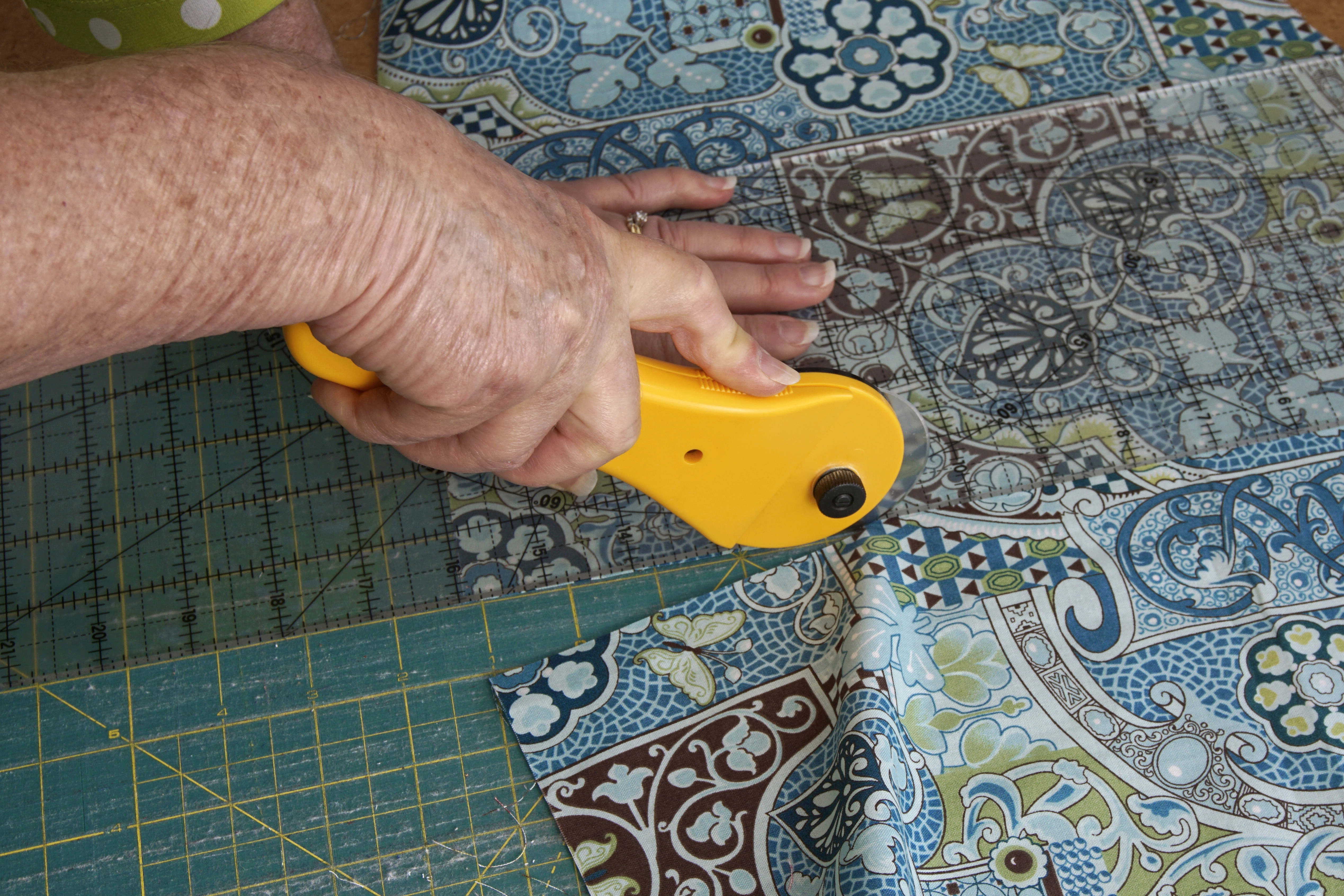
Cutting Tips for Strip Piecing Success
1. Start With Quality Fabric Prep
Press your fabric thoroughly before cutting—wrinkles = wonky strips. Wonky strips kind of defeats the purpose of using this efficient, time-saving technique.
2. Use a Sharp Rotary Cutter
Dull blades can fray fabric or cause shifting. They make things so much harder when you’re working on a big project. Time for a blade change? Do it! Trust me on this one. A sharp blade helps you get cleaner and straighter lines, saving you a massive headache.
3. Line It Up, Don’t Eyeball It
Use the lines on your ruler, not the cutting mat, for more accurate strip widths.
Line up the ruler with both the top and bottom edges of the fabric to prevent angled cuts. Get those nice straight edges by making your sharp blade and your ruler best friends.
4. Cut With the Grain (Whenever Possible)
Cutting on the straight grain keeps the strips more stable and less stretchy. Wobbly strips lead to wobbly blocks, and nobody’s got time to be easing and stretching every single piece like it’s a Pilates class for fabric.
5. Stack With Caution
If you’re cutting multiple layers, make sure all fabric is aligned properly before cutting. Learn from my lessons. Don’t over-stack your fabric… You might end up ruining the batch. Heartbreaking.
Only stack as many layers as you’re confident won’t shift—more isn't always better. I’d say two or three at the most.
Pressing Tips for Clean, Crisp Strip Sets
1. Press, Don’t Iron
Set your seams first (press your seam flat). That iron isn’t a mop, and your strip set isn’t a kitchen floor. A gentle press keeps your fabric in line and your seams crisp.
Avoid “dragging” the iron back and forth—it can distort the strip set. This can stretch your fabric faster than a cat chasing a bobbin. Pressing helps your pieces stay true and not wobbly.
2. Keep Things Flat
Let things cool before you do anything. After pressing, don’t rush it. Give your strip set a moment to chill on a flat surface. Warm seams can stretch or crinkle if you move them too soon.
No folding, no stacking, no funny business. Lay it flat and leave it alone unless you want a wavy mess when it’s time to cut. (Ask me how I know…)
3. Trim Up if Needed
Wonky edges = wonky blocks. Take a peek at the top and bottom of your strip set after pressing. If things look a little crooked, it’s not you—it’s the fabric. But take care of this before you do anything else.
Give it a clean-up haircut. Use your ruler and rotary cutter to straighten that edge before you start sub-cutting. Your future blocks will thank you. It shouldn’t need anything major; we aren’t cutting major inches off, just a touch-up.
4. Know Your Pressing Preference
Open or to the side? Pressing seams open keeps things sleek and flat (especially in strip-heavy sets), but pressing to one side makes nesting a dream. This is totally a preference thing. Weigh the pros and cons (or a little trial and error) and figure out what you like best.
Pick what works—and commit. The real secret? Be consistent. Changing mid-quilt is like switching shampoo brands mid-shower. Just… don’t. Trust me, you will make many quilts, you can change things up for your next quilt if this isn’t your favorite.
When you’re trying strip piecing, start simple, then experiment.
If you’ve never tried strip piecing, try it on a small project like a table runner or baby quilt to really get a feel for the technique and see if it’s for you. There are lots of different ways to piece together a quilt. It can be good to try things out and see what you like and don’t like.
But strip piecing is a great one if you’re looking for the perfect mix of efficient and precise. Quilts can be a lot of work, so it can be worth it to try out techniques that save you time (and potentially sanity!).
Once you’re feeling confident, move on to more complex layouts or even improv strip piecing. There are lots of ways you can make this technique work, but at least give it a shot before turning up your nose.
Want to learn more about this technique? Some of our retreat quilters love strip piecing! Join our March retreat to pick their brains and go home a master strip piecer!
